Russian Christmas: Why It's on 7 January & Traditions
Russian Christmas is celebrated on 7 January, not 25 December, because the Russian Orthodox Church still keeps the old Julian calendar that now sits thirteen days behind our own. But the date is only half the story. For most of the last century Christmas in Russia was pushed into the shadows, and a secular New Year took over almost everything we think of as Christmas, from the decorated tree to the gift-bringer himself. The result is a holiday season that feels familiar and surprising at the same time, with its own gift-givers, its own feast and its own quietly magical customs.
Russian Orthodox Christmas Day falls on 7 January every year, with Christmas Eve, the more important evening, on 6 January. The date never drifts, because it is simply 25 December counted on the Julian calendar. In 2026 that means Russian Christmas lands on Wednesday 7 January, while much of the West has already taken down the tree. If you want the full story of why the Orthodox world runs thirteen days behind, we cover the calendar split in our guide to Orthodox Christmas. Here we are staying with what makes the Russian celebration its own thing.
The single biggest thing to understand about Christmas in Russia is that, for most people, the real festive blow-out happens on New Year's Eve, not on 7 January. That is no accident. After the 1917 revolution the Soviet state discouraged all religious celebration, and in 1929 Christmas was abolished as a holiday outright. The Christmas tree was condemned as a bourgeois religious symbol and effectively banned.
Then, in 1935, the state changed its mind. The tree was brought back, but rebranded as a secular "New Year tree", the novogodnyaya yolka. Gift-giving, decorations and the festive feast were all quietly shifted onto the New Year, stripped of their religious meaning. By the time Christmas returned as an official holiday in 1992, after the collapse of the Soviet Union, New Year had been the country's grand winter celebration for two generations, and it still is. You can read more about this history in the overview of Christmas in Russia on Wikipedia. Christmas on 7 January is now the quieter, more religious and more private bookend to a season that opens with fireworks on 31 December.
Cosy pick of the season
Women's Retro Reindeer Red Christmas Jumper
Pull on Women's Retro Reindeer Red Christmas Jumper and let the cosy, twinkly evenings begin.
One small ritual sums it up. On New Year's Eve millions of Russian families sit down to the same 1975 Soviet film, a gentle romantic comedy called The Irony of Fate, in much the way British households reach for the same carols or films every December. It is shown on television every single year, and watching it has become its own tradition.
Ded Moroz and Snegurochka, not Santa
Russia's gift-bringer is Ded Moroz, which translates as Grandfather Frost. He looks like a cousin of Father Christmas, tall and white-bearded in a long flowing coat that is often blue rather than red, and he carries a magic staff instead of riding a sleigh of reindeer. Crucially, he visits on New Year's Eve rather than at Christmas, which is why so many of the gifts and the tree belong to New Year in Russia.
He does not travel alone. At his side is Snegurochka, the Snow Maiden, his granddaughter and helper, who hands out presents and leads the children in songs and verses around the yolka. There is no equivalent figure in the British or American Christmas, and she is one of the most distinctive faces of the whole Russian season. Children traditionally form a circle around the tree and call out for Ded Moroz and Snegurochka, and when they appear the lights on the tree are lit. Both figures have deep roots in Slavic folklore, as the background on Ded Moroz explains.
The Holy Supper and Russian Christmas food
On Christmas Eve itself, many devout families keep a custom that goes back centuries. Following the long Nativity Fast, nothing is eaten until the first star appears in the evening sky, a nod to the Star of Bethlehem. The Christmas Eve meal is the Holy Supper, often made up of twelve meatless dishes, one for each of Christ's twelve apostles.
The dish at the heart of it is kutia, also called sochivo, a sweet porridge of wheat or rice berries with honey, poppy seeds, nuts and dried fruit. It stands for unity and a good harvest, and it is sometimes eaten from a single shared bowl. The word for Christmas Eve in Russian, sochelnik, comes straight from sochivo. Around it the table might hold beetroot soup or borscht, vegetable and mushroom pies, sauerkraut, pickled vegetables and buckwheat porridge. To finish, families serve vzvar, a warming drink of dried fruit and honey boiled in water.
Christmas Day, once the fast is broken, is the feast proper. The table groans with roast goose or pork, hearty pies (pirogi) and little meat dumplings (pelmeni). For pudding there are fruit pies, fresh and dried fruit, and Russia's beloved spiced honey biscuits, pryaniki. In some regions bakers still make kozulya, festive cookies shaped like sheep, goats and deer. It is comfort food built for a long, cold, candlelit evening with family.
Svyatki: caroling and fortune-telling
The twelve days that follow Christmas are known as Svyatki, and they carry some of the oldest, most folkloric customs in the Russian year, rooted in pre-Christian midwinter rites. The best known is Koliada, a kind of caroling in fancy dress. Groups of young people, the kolyadary, dress as bears, goats and other folklore characters in fur and masks, then go from house to house singing kolyadki, the carols, in return for sweets, pastries and small coins. Tradition warns that a household that turns the carolers away with nothing will see no prosperity in the year ahead, so the goat, a symbol of plenty, is always welcomed in.
Svyatki is also the season for fortune-telling. Although the Orthodox Church frowns on it, the custom survives from pagan times, and it was traditionally the preserve of young unmarried women hoping to glimpse their future husband. Methods range from reading patterns in melted wax to counting out a handful of rice: an even number means your wish will come true, an odd number means not yet.
The Babushka myth
One last thing worth clearing up, because almost every English-language list of Russian Christmas traditions repeats it. You will often read the tale of Babushka, an old woman who turned the Wise Men away, missed her chance to meet the Christ child, and is said to wander still, leaving gifts for children as she searches. It is a lovely story, but it is not really Russian. Babushka simply means grandmother, and the legend appears to have been written by an American poet, Edith Matilda Thomas, in 1907. Most Russians have never heard of it. The genuine Russian gift-bringers are Ded Moroz and Snegurochka.
How to say Merry Christmas in Russian
If you want to greet someone, the warm Russian Christmas wish is S Rozhdestvom (С Рождеством), meaning "with the Birth of Christ", or the fuller Schastlivogo Rozhdestva (Счастливого Рождества). And because New Year is the bigger event, you will hear S Novym Godom (С Новым Годом), "Happy New Year", just as often through the whole season.
Whether you are marking the day with Orthodox friends, hosting your own family feast or simply curious about how the rest of the world keeps Christmas, the Russian way is a lovely reminder that the season can run well into January. And if your gathering calls for something cosy and a little bit festive to wear, our family favourites are a good place to start.
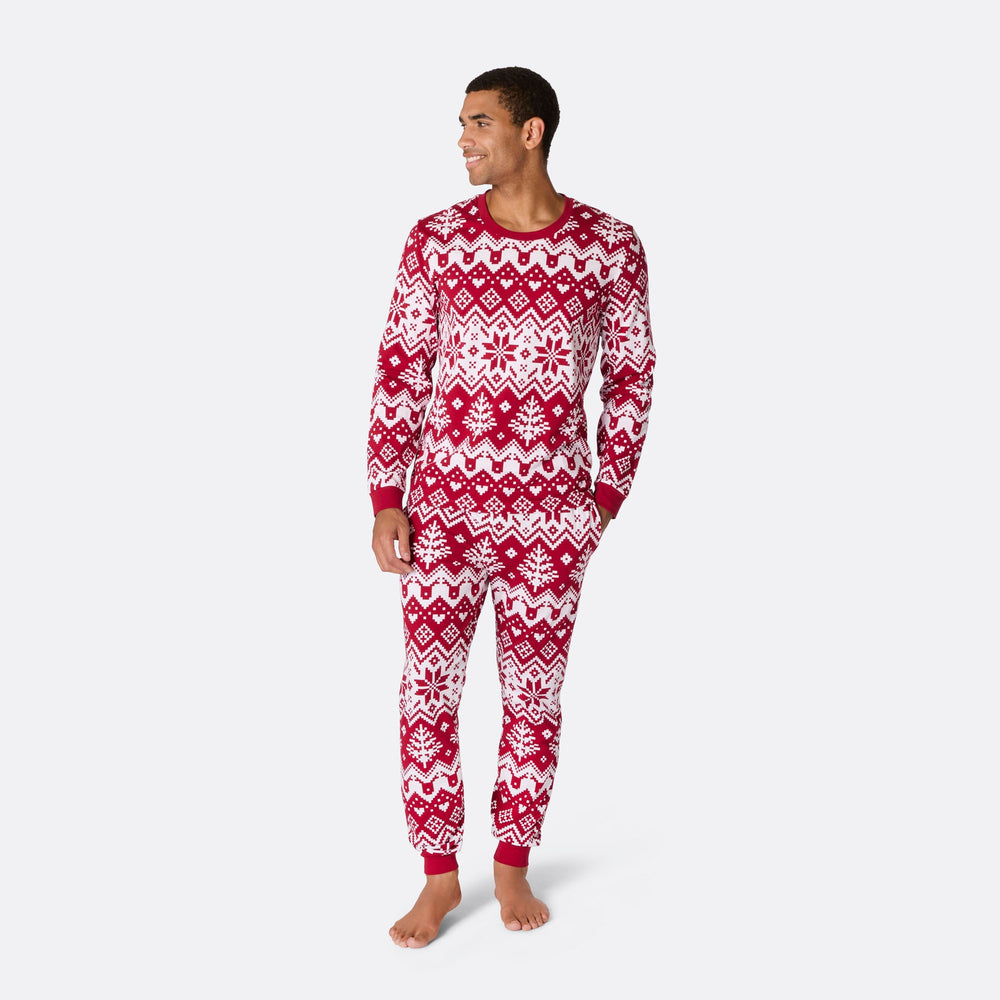
For more, our full range of Christmas jumpers covers every size, and matching family Christmas jumpers are perfect when several generations gather for the feast. If you are bringing a present to an Orthodox household in January, the Secret Santa gifts are full of easy ideas, and a set of Christmas pyjamas makes a cosy gift for the long, slow evenings of the season.
Did you know?
Russian Orthodox Christmas Day is 7 January, with Christmas Eve on 6 January.
The Julian calendar now runs 13 days behind the Gregorian calendar.
Christmas was banned in Russia in 1929 and revived as a secular New Year in 1935.
The Holy Supper traditionally has 12 meatless dishes, one per apostle.
Ded Moroz and his granddaughter Snegurochka bring gifts on New Year's Eve.
Frequently asked questions about Russian Christmas: Why It's on 7 January & Traditions
Because the Russian Orthodox Church still follows the old Julian calendar, which now runs thirteen days behind the Gregorian calendar most of the world uses. So 25 December on the Julian calendar lands on 7 January for everyone else, and that is when Russian Orthodox Christmas Day is kept, with Christmas Eve on 6 January.
Christmas Eve on 6 January is the heart of it. After the long Nativity Fast, families wait for the first star to appear, then share the Holy Supper of twelve meatless dishes, centred on kutia, a sweet wheat porridge with honey and poppy seeds. The twelve days afterwards bring Svyatki customs like Koliada caroling in costume and fortune-telling.
Under the Soviet Union, Christmas was banned as a religious holiday in 1929. In 1935 the festive tree, gifts and the gift-bringer Ded Moroz were revived as a secular New Year celebration instead. New Year has been Russia's grand winter holiday ever since, and Christmas on 7 January remains the quieter, more religious bookend.
Ded Moroz, or Grandfather Frost, the Russian gift-bringer. He is tall and white-bearded in a long coat, carries a magic staff and visits on New Year's Eve rather than Christmas. He is joined by his granddaughter Snegurochka, the Snow Maiden, who helps hand out presents to the children.
The Russian Christmas greeting is S Rozhdestvom (С Рождеством), meaning with the Birth of Christ, or the fuller Schastlivogo Rozhdestva (Счастливого Рождества). Throughout the season you will also hear S Novym Godom (С Новым Годом), Happy New Year, just as often.