Christmas in Italy, known as Natale, is a gentle marathon rather than a single day: it opens on 8 December with the Feast of the Immaculate Conception and does not truly close until La Befana arrives on 6 January. In between sit nativity scenes on every street corner, a meat-free seafood feast on Christmas Eve, panettone by the slice and a kindly broomstick-riding witch who finishes what Father Christmas began. Here is how the whole Italian festive season actually unfolds, in the order Italians live it.
The Italian Christmas season runs for almost a full month, far longer than the British version. It begins on 8 December, the Feast of the Immaculate Conception, the traditional day for putting up the Christmas tree and setting out the nativity scene. From there the celebrations build through Christmas Eve and Christmas Day, carry on past New Year, and only end on 6 January with the Epiphany. For many families the Christmas tree and the crib stay in place that entire stretch, so a home decorated on 8 December is still glowing well into the new year (Wikipedia: Christmas in Italy).
Because the season is so long, there is no single "Christmas rush" the way there is elsewhere. The mood arrives early, settles in, and lingers, which is part of why so many visitors find an Italian December so relaxing.
If one tradition sits at the heart of Christmas in Italy, it is the presepe, the nativity crib scene. The custom was made famous by St Francis of Assisi, who staged a living nativity in 1223, and it has been central to Italian homes, churches and piazzas ever since. The figures go out on 8 December, but the figure of the baby Jesus is only laid in the manger on the night of 24 December, a small ritual that marks the real arrival of Christmas.
Naples is the undisputed capital of the craft. Its presepi napoletani are famous worldwide, and the narrow street of Via San Gregorio Armeno is lined with workshops selling handmade figures all year round. Neapolitan scenes are wonderfully busy: alongside the Holy Family you will find everyday characters, miniature shops, food, animals and even cheeky figurines of famous politicians and celebrities. In St Peter's Square at the Vatican, a life-size crib stands beside a giant tree donated by a different region or country each year, a tradition begun by Pope John Paul II in 1982.
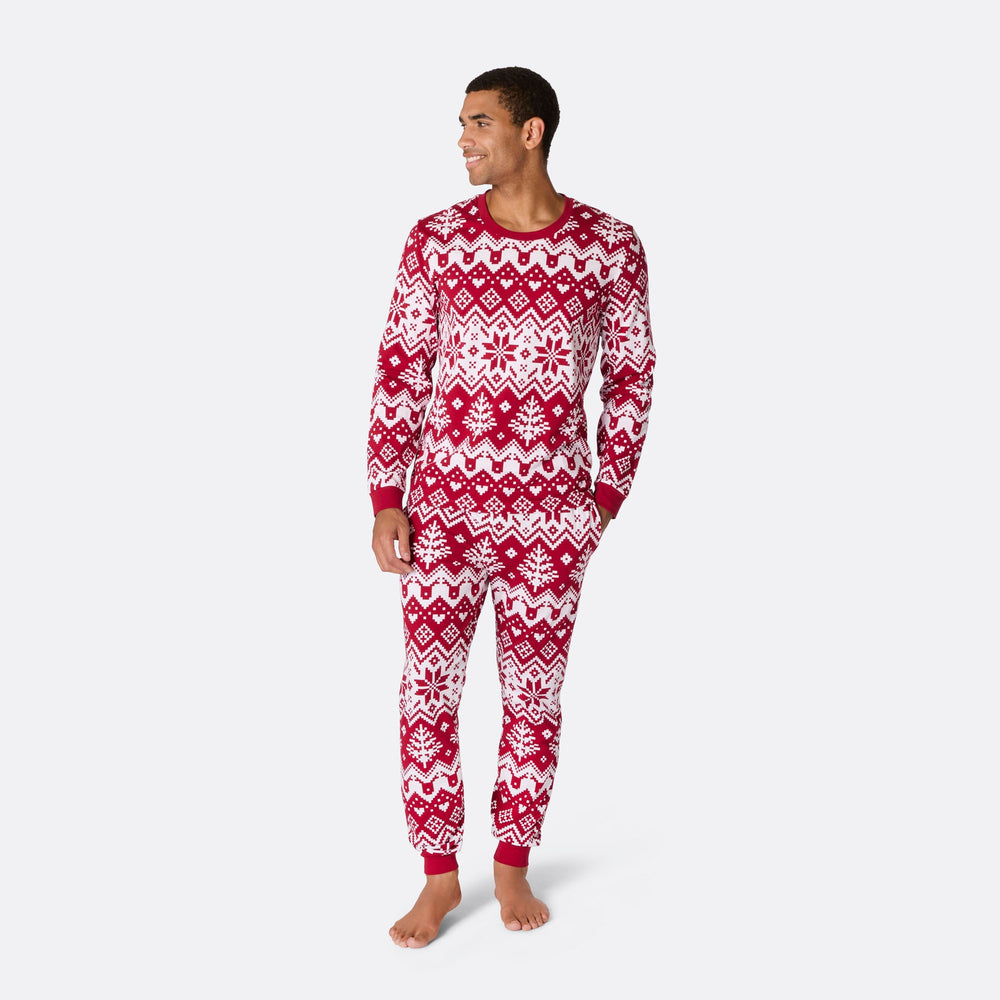
Made for chilly nights in
Men's Merry Grinchmas Christmas Jumper
Men's Merry Grinchmas Christmas Jumper is the kind of cosy that makes you wish Christmas lasted all winter.
Christmas Eve, La Vigilia, is when the celebrations really begin. Following old Catholic custom, many Italians eat no meat on this day, choosing a lighter meal of fish and seafood before heading to Midnight Mass. The dishes vary from region to region, but the spirit is the same: a long, unhurried table shared with family.
The most famous version is the Feast of the Seven Fishes (Festa dei sette pesci), which has its roots in southern Italy and became hugely popular among Italian-American families. Baccalà (salted cod), clams, calamari, sardines and eel are classic choices. Theories about the number seven abound, from the seven days of creation to the seven sacraments of the Catholic Church, and some families happily push the count to nine, eleven or even thirteen dishes.
Whether you are hanging them by the fireplace for La Befana or simply keeping warm, a pair of cosy Christmas socks is a small, joyful nod to the most Italian night of the season.
Panettone, pandoro and Italy's sweet table
No Italian Christmas is complete without its festive cakes. Panettone, a tall, airy sweet bread studded with candied fruit and raisins, originates in Milan and is the season's signature bake, often enjoyed with a cup of hot chocolate after Mass. Its great rival is pandoro, a star-shaped, butter-rich cake from Verona dusted with icing sugar to look like snow-capped peaks. Most households keep both on hand, and the friendly panettone-versus-pandoro debate is part of the fun.
Carols, bagpipes and the Ceppo
Older customs still colour the Italian season. In regions such as Abruzzo and Molise, zampognari, traditional bagpipers dressed as shepherds, come down from the hills to play in town squares, echoing the shepherds who travelled to see the newborn Jesus. The formal celebrations open with a Novena, nine days of prayers and church services leading up to Christmas, and some families still burn a Ceppo, a Yule log kept alight through the season for good luck.
La Befana, the Three Kings and Italy's gift-bringers
Italy has not one gift-bringer but several. On Christmas Day, Babbo Natale (Father Christmas) brings presents to children. But the most beloved figure arrives last: La Befana, a kindly old witch who flies on a broomstick on the night of 5 January. Children hang up stockings for her to fill, and on the morning of Epiphany the good ones find sweets while the naughty ones get a lump of sugar "coal". In parts of northern Italy it is the Three Kings, not La Befana, who bring the Epiphany gifts. Stockings by the fireplace are the heart of this tradition, which is why a set of festive socks feels right at home in any Italian December.
How to say Merry Christmas in Italian
The simple, warm way to wish someone a happy Christmas in Italy is "Buon Natale", which literally means "Good Christmas". You will also hear "Buone Feste" (Happy Holidays) used widely through the season. Regional languages have their own versions too, such as Bon Natali in Sicilian and Bon Nadèl in Ladin, spoken in parts of South Tyrol.
Is Italy a good place to spend Christmas?
For many travellers, yes. Cities such as Rome, Florence, Naples and Bolzano come alive with lights, markets and music, and most major museums and sights stay open through the season, closing only on Christmas Day and New Year's Day. Bolzano in the South Tyrol is often called the Christmas capital of Italy thanks to its famous market on Piazza Walther, while Naples offers the unmatched magic of its nativity workshops. Coastal and lakeside resorts largely wind down for winter, so a city-focused trip tends to work best. Whichever corner you choose, the long, food-loving, family-centred rhythm of an Italian Natale is an easy one to fall in love with, and just as easy to bring home, jumper and all.
From the first presepe on 8 December to the last stocking filled by La Befana on 6 January, Christmas in Italy is a season to be savoured slowly. Pull on a soft matching family Christmas jumper, pour the hot chocolate, and let the celebrations stretch the way the Italians intended. For more festive comfort, our Christmas pyjamas are made for the cosy mornings in between. Buon Natale!
Did you know?
The Italian Christmas season runs almost a full month, from 8 December to 6 January.
The baby Jesus figure is only placed in the nativity crib on the night of 24 December.
Naples' Via San Gregorio Armeno is a whole street of year-round nativity-figure workshops.
The Feast of the Seven Fishes has roots in southern Italy and became a beloved Italian-American tradition.
La Befana, a friendly witch, brings gifts on 6 January, the Epiphany.
Frequently asked questions about Christmas in Italy: Traditions, Food & La Befana
Christmas in Italy is a month-long season from 8 December to 6 January, built around the nativity scene (presepe), a meat-free seafood meal on Christmas Eve, Midnight Mass, festive cakes like panettone and pandoro, and gifts from Babbo Natale and La Befana.
It begins on 8 December with the Feast of the Immaculate Conception, when trees and nativity scenes go up, and ends on 6 January with the Epiphany, when La Befana brings gifts. Many families keep their decorations up for the whole period.
Italians say "Buon Natale", which literally means "Good Christmas". You will also often hear "Buone Feste" (Happy Holidays) throughout the season.
Gifts are not only delivered by Father Christmas. On the night of 5 January, La Befana, a kindly old witch, flies on a broomstick to fill children's stockings with sweets, leaving a lump of sugar coal for the naughty ones.
Bolzano in South Tyrol is often called the Christmas capital of Italy for its market on Piazza Walther, while Naples is unrivalled for its nativity-scene workshops on Via San Gregorio Armeno. Rome, Florence and Milan also shine with lights and markets.