The Yule goat is one of the oldest Christmas symbols in Scandinavia, a straw goat tied with red ribbon that traces all the way back to the Norse god Thor and the two goats that pulled his chariot across the sky. Today you will find it as a little ornament under the tree, but for centuries it was a gift bringer, a midwinter spirit and even, in one Swedish town, a thirteen metre giant that the locals try very hard to keep from going up in flames. Here is the full story, from Thor to straw to Father Christmas.
The Yule goat (Julbock in Swedish, julebukk in Norwegian and joulupukki in Finnish) is a Scandinavian and Northern European midwinter symbol with roots in Germanic paganism. In its modern form it is a small goat made of straw and bound with red ribbon, a popular decoration that sits under or hangs on the Christmas tree across Sweden, Norway, Denmark and Finland. Long before that, though, the goat was a living part of how people marked the turning of the year, and its meaning has shifted again and again over the centuries.
The most popular theory ties the goat to the worship of Thor, the thunder god, who rode the sky in a chariot drawn by two goats named Tanngrisnir and Tanngnjóstr. In the old sagas these were magical, almost immortal animals. Thor could slaughter and eat them at night, then bring them back to life the next morning, as long as every bone was kept whole. That image of an animal that dies and returns fits the darkest point of the year perfectly, because the winter solstice is when the sun itself seems to die and then begin its slow rebirth.
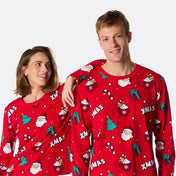
Snug and merry
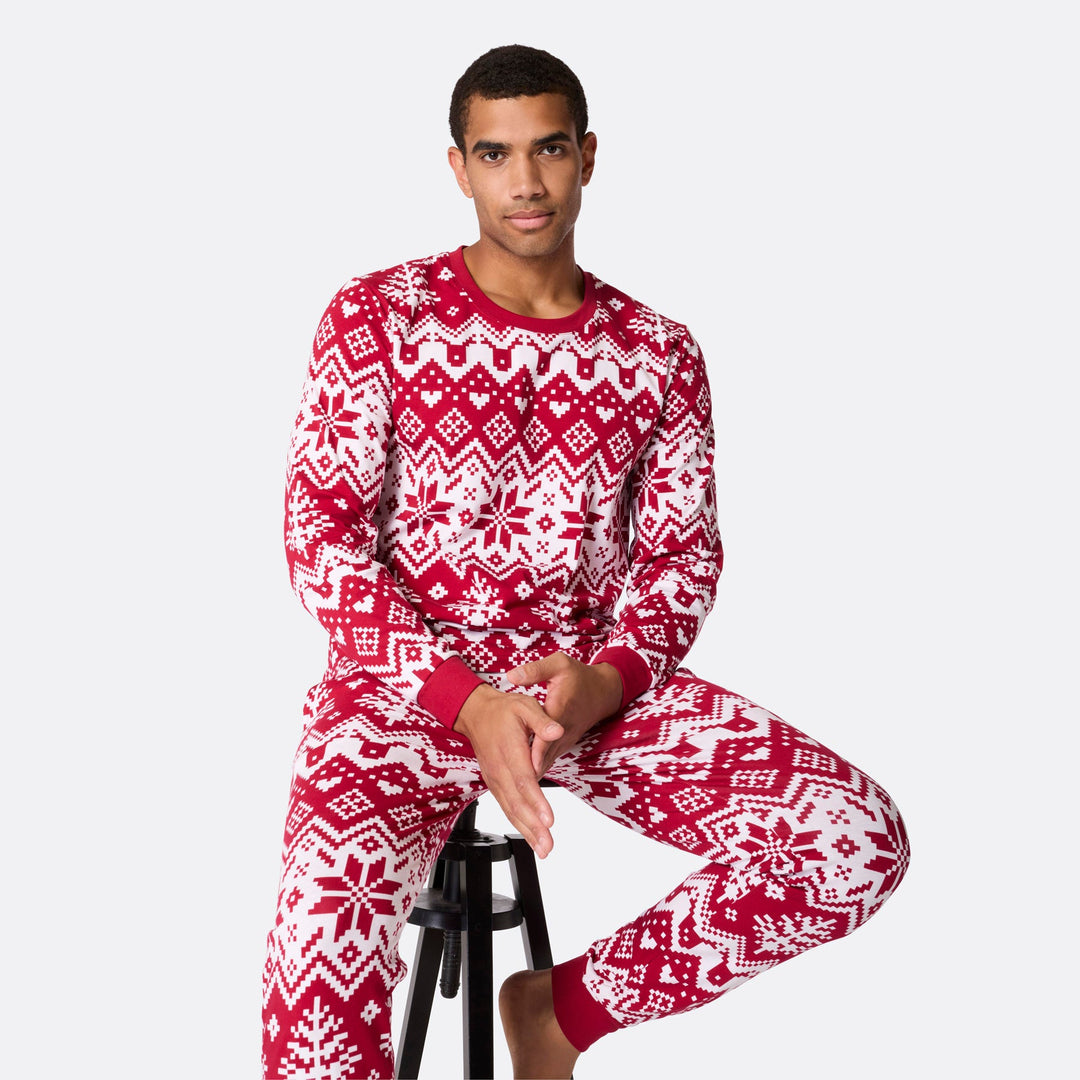
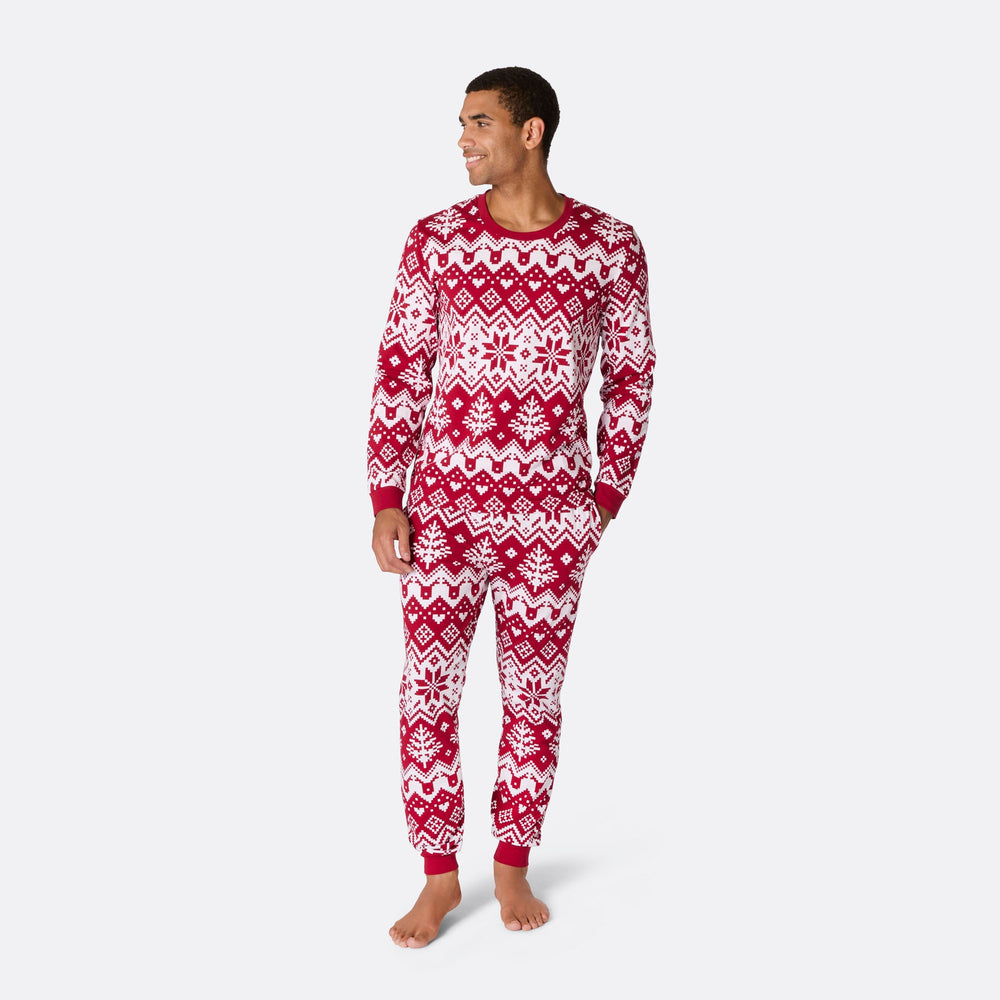
Men's Christmas Scenery Christmas Jumper
Curl up by the tree in Men's Christmas Scenery Christmas Jumper and feel instantly more merry.
There was also a practical, farming side to it. The last sheaf of grain bundled in the autumn harvest was believed to hold the spirit and luck of the crop, so it was saved and given a place of honour at the Yule feast. In several regions that final sheaf was shaped into a goat and called the Julbock, the Yule goat, which is exactly why the traditional ornament is made of straw to this day. The harvest goat and the divine goat slowly became one idea.
The mischievous midwinter spirit
For a long stretch of history the Yule goat was not cuddly at all. In Sweden people imagined it as an invisible spirit that turned up shortly before Christmas to check that all the Yule preparations had been done properly. A favourite old prank was to sneak a straw Yule goat into a neighbour's house without being seen, and whoever got caught out had to pass it on to someone else in the same sly way.
That house to house, dress up together spirit of Yule has never really left the festive season, and a set of matching family Christmas jumpers is a lovely modern way to carry it on.
In a custom close to the English tradition of wassailing, young people would dress up in costume and travel from house to house over the festive period, singing, performing little plays and demanding treats. The band of characters often included a rowdy, slightly frightening goat figure. The church was uneasy about all this, and the goat's wild, horned image even became linked with the devil, a dark thread that survives today in the Alpine figure of Krampus.
From gift bringer to Father Christmas
During the 19th century the goat softened. Across Scandinavia it took on a kinder role, and one of the men in the household would dress up as the Yule goat to hand out the presents on Christmas Eve. In old folk art you can still spot the goat carrying Santa's sack from house to house, and sometimes Father Christmas is even shown riding on its back. This is the moment the Yule goat became a true Christmas gift bringer.
Then, in the second half of the 19th century and into the early 20th, the goat was gradually replaced by the friendly red figure we know now, the jultomte or julenisse, the Scandinavian Father Christmas. One charming clue survives from this handover: in Finland the word for Father Christmas is still Joulupukki, which means, quite literally, Yule goat. The costume changed, but the old name stuck.
The Gävle goat: the giant that keeps getting burned
The most famous Yule goat of all stands in the Swedish town of Gävle (say it roughly as "yev-leh"). In 1966 the town decided to build a giant straw goat for its main square as a festive centrepiece, and the Gävle goat has returned every year since. There is just one problem. A goat made of straw is extremely easy to set alight, and almost from the start people have tried to burn it down. Over the decades it has been destroyed dozens of times, often before Christmas even arrives.
The attempts have become the stuff of legend. The goat has been torched by people dressed as Santa and gingerbread men firing flaming arrows, set ablaze by hackers who disabled the security cameras, and rammed by a car. One year a security guard was even offered a bribe by men plotting to lift the whole goat away by helicopter. The town has answered with fences, guards, cameras and flame retardant spray, and it has earned a place in the Guinness World Records for its size. Locals now half jokingly bet on whether each year's goat will survive to see Christmas Day.
Julebukking: the goat-masked door knock
The old costume tradition lives on under the name julebukking, mostly in Norway and in Scandinavian communities abroad. In the quiet days of "romjul" between Christmas and New Year, groups of friends and neighbours put on masks and disguises and go from door to door. The hosts who answer have to guess who is hiding under each costume, and there are songs, treats and a good deal of laughter. If it sounds a little like Halloween trick or treating, that is no coincidence, since the two share deep, ancient roots in midwinter mischief.
The Yule goat today
You do not need to live in Stockholm to bring a bit of the Julbock into your home. A small straw goat with a red ribbon is one of the easiest and most authentic Scandinavian decorations to add to a mantelpiece or tree, and many families like to make their own from a handful of straw or raffia. Pair it with the cosy, Nordic side of the season, a warm knit and a quiet evening, and you have the heart of a Scandinavian Christmas. Our Christmas jumpers lean happily into that reindeer-and-snowflake look, and a pair of soft Christmas pyjamas rounds off a properly hygge December night.
From a thunder god's chariot to a thirteen metre straw giant under siege, the Yule goat has worn many faces. It has been a harvest spirit, a midwinter prankster, a gift bringer and finally a quiet little ornament on the tree. Whichever version you like best, it is a wonderful reminder that our modern Christmas is woven from threads far older than we often imagine.
Did you know?
Thor's chariot was pulled by two goats, Tanngrisnir and Tanngnjostr, who could be eaten and brought back to life.
The Finnish word for Father Christmas, Joulupukki, literally means Yule goat.
The traditional Yule goat is made of straw because it began as the last sheaf of the harvest.
The giant Gavle goat in Sweden has stood every year since 1966 and has been destroyed dozens of times.
In the 19th century a family member would dress as the Yule goat to hand out the Christmas presents.
Frequently asked questions about The Yule Goat: Norse Origins to Father Christmas
The Yule goat is one of Scandinavia's oldest Christmas symbols. It is linked to the Norse god Thor, whose chariot was pulled by two goats, and to the last sheaf of the harvest, which was saved for Yule and shaped into a straw goat. Over the centuries it became a midwinter spirit, then a gift bringer, before fading into the small straw ornament seen on trees today.
Not as part of the real tradition. The burning is tied to one specific goat, the giant straw Gävle goat in Sweden, which vandals have repeatedly set alight since 1966. The town actually tries to protect it with guards, fences and cameras. A small Yule goat ornament at home is simply a decoration, not something meant to be burned.
Not exactly, but they share a root. In medieval folklore the goat's wild, horned image became linked with the devil, and the church even banned dressing in goat skins. That darker, frightening side of the midwinter goat survives in Alpine countries as Krampus, a horned figure who punishes badly behaved children, while the Scandinavian Yule goat grew gentler over time.
Yule folklore is full of strange figures. Alongside the Yule goat you find the Icelandic Yule Cat, the household nisse or tomte, the Finnish Joulupukki (whose name literally means Yule goat), and gift bringers such as the jultomte and Father Christmas. Many of these characters slowly merged into the modern image of Santa Claus.
Its origins are pagan. The Yule goat comes from pre Christian Germanic and Norse midwinter celebrations, with strong links to Thor and to harvest rituals around the winter solstice. When Christianity spread, many of these customs were absorbed into Christmas rather than erased, which is why the goat is still part of the festive season today.