Where does Santa live? Officially, Santa Claus lives in Rovaniemi, in Finnish Lapland, right on the edge of the Arctic Circle. That is the answer the whole world has more or less agreed on, and it is the one address where you can actually meet him 365 days a year. His secret workshop, though, is said to be tucked away on a snowy fell called Korvatunturi, far enough into the wilderness that no one has ever quite managed to find it. So the short version is simple. The longer version, with reindeer, a 4th-century bishop and a few countries politely arguing over him, is a lot more fun.
Ask a child in Britain and they will usually say the North Pole. Ask a child in Finland and they will tell you, without a flicker of doubt, that Santa lives in Lapland. Finland is the version that stuck. Santa's official hometown is Rovaniemi, a town that sits almost exactly on the Arctic Circle, and just outside it you will find Santa Claus Village, open every single day of the year. Reindeer roam the surrounding forests, huskies pull sledges across the snow, and on a clear winter night the Northern Lights ripple green and pink across the sky. If you were choosing somewhere to spend the off-season, you would probably pick here too.
Where in the world Santa is said to live
1Rovaniemi, Finland – the official hometown on the Arctic Circle, with his hidden workshop at Korvatunturi. The version most of the world now accepts.
2Uummannaq, Greenland – Danish and Greenlandic tradition gives Santa, known locally as Juulimaaq, a small turf-and-stone hut as a quiet summer retreat.
3North Pole, Alaska – a real town in interior Alaska, nowhere near the actual Pole, that has run on year-round Christmas spirit since 1952.
4Mora, Sweden – home of the Santaworld theme park, Sweden's bid to be the great man's address.
5Veliky Ustyug, Russia – the official home of Ded Moroz, or Father Frost, who delivers gifts with his granddaughter the Snow Maiden.
His actual home and workshop, the legend goes, is a little deeper into the wild, on the fell of Korvatunturi near the Russian border. Its shape is said to look like a hare's ears, which is rather neatly how Santa hears every wish whispered around the world. You cannot visit the workshop itself, but you can absolutely visit him in Rovaniemi, and you can write to him.
So why does everyone say the North Pole?
Blame a Victorian cartoonist. Until the middle of the 19th century, nobody had pinned down exactly where Santa lived. Then in 1866 the American illustrator Thomas Nast drew him in Harper's Weekly in a frozen, snowy landscape, and added a caption placing his home at the North Pole. It was the perfect choice: remote, impossibly cold, and at the time completely unexplored, so nobody could pop up there and spoil the magic. No explorer reached the North Pole until the early 20th century, which left Santa undisturbed in his workshop for decades.
Christmas must-have
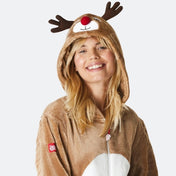
Kids' Rudolph Christmas Jumper
Soft, snug and unmistakably festive, Kids' Rudolph Christmas Jumper was made for lazy Christmas mornings.
The catch is that the geographical North Pole is not land at all. It is a point in the middle of the Arctic Ocean, with nothing underfoot but sea ice drifting on the water. Not exactly prime real estate for a toy factory. So most modern traditions quietly moved Santa onto solid ground a little further south, which is how Lapland won the title.
The countries that all claim Santa
Santa is popular enough that several northern countries cheerfully claim him as their own, and each has a perfectly good story:
They cannot all be right, of course, but that is rather the point. Each country dressed the same kind-hearted figure in its own snow and folklore, and every version is true to the people who tell it.
When the letters are written and the reindeer named, our festive Christmas jumpers are an easy way to bring a little of Santa's Lapland into your own front room.
The real history: a saint from Turkey
Here is the twist that surprises most people. The figure behind Santa Claus did not come from the snow at all. He came from somewhere warm. Santa traces back to Saint Nicholas, a Christian bishop who lived in the 4th century in Myra, a town in what is now southern Turkey. The stories say he was born into a wealthy family and gave it all away to help the poor, once secretly dropping bags of gold through a window so they landed in stockings drying by the fire. Sound familiar? That is widely told as the origin of hanging up a stocking on Christmas Eve.
Nicholas became the patron saint of children and of sailors, and sailors carried his story across Europe. The Dutch name for him, Sinterklaas, eventually softened into Santa Claus. So the white beard and the red coat are northern inventions, but the kindness at the centre of him is well over fifteen hundred years old.
Where does Santa live in the UK?
Santa does not have a permanent British address, but every December he is remarkably easy to find. Garden centres, shopping centres and stately homes across the country open grottos where families can meet him, and a handful of "Lapland" experiences recreate his snowy world without the long flight north. For the real thing, plenty of British families do make the trip to Rovaniemi for a once-in-a-lifetime visit. Wherever you see him, the routine is the same: tell him your wishes, and have a photo taken to prove it.
Can you actually write to Santa?
You can, and your letter really will reach Lapland. Santa's main post office in Rovaniemi receives hundreds of thousands of letters from children all over the world every year, and you can address yours to Santa Claus, Santa Claus Main Post Office, FI-96930 Arctic Circle, Finland. In the United States, letters often go to the town of North Pole, Alaska instead. In the UK, Royal Mail runs its own Santa address each year with a posting deadline in early December, so it is worth checking the date so your letter beats the Christmas rush.
Bringing a little Lapland home
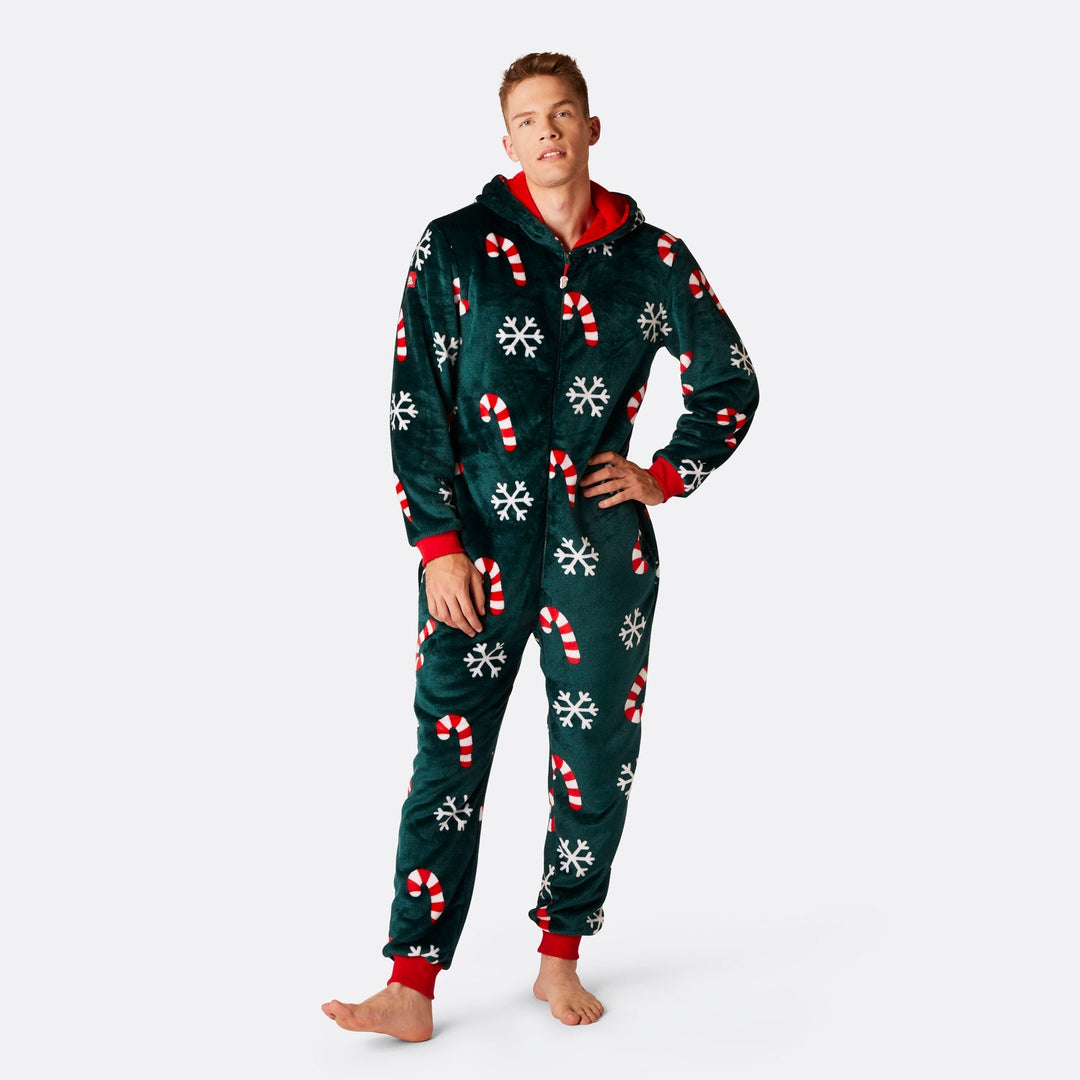
You do not need to fly to the Arctic Circle to feel the magic. Half the fun of the season is dressing the part at home, whether that is a cosy film night, a trip to the local grotto, or Christmas Eve itself. A reindeer jumper is about as close as most of us get to Santa's actual sleigh team, and getting the whole family into matching family Christmas jumpers turns an ordinary evening into a proper occasion. For the night Santa is actually on his way, soft Christmas pyjamas are the traditional uniform for hanging the stockings and leaving out a mince pie.
So, where does Santa live? On paper, Rovaniemi in Lapland, with a workshop hidden away at Korvatunturi and a postbox that genuinely answers. In spirit, he lives a little bit everywhere people choose to be kind at Christmas, which, when you think about it, is exactly the way a saint from sunny old Turkey would have wanted it.
Did you know?
Santa's official hometown, Rovaniemi, sits right on the Arctic Circle in Finnish Lapland.
His secret workshop is said to be on Korvatunturi, a fell shaped like a hare's ears so he can hear every wish.
The North Pole idea dates to an 1866 Thomas Nast cartoon in Harper's Weekly.
The real Saint Nicholas was a 4th-century bishop from Myra in modern-day Turkey.
Santa's Rovaniemi post office receives hundreds of thousands of letters from children every year.
Frequently asked questions about Where Does Santa Live? The Real Answer
Santa's official home is Rovaniemi in Finnish Lapland, right on the Arctic Circle, where you can meet him every day of the year at Santa Claus Village. His secret workshop is said to be on the fell of Korvatunturi, deep in the Lapland wilderness.
You can write to Santa Claus, Santa Claus Main Post Office, FI-96930 Arctic Circle, Finland. His post office in Rovaniemi receives hundreds of thousands of letters each year. In the UK, Royal Mail also runs its own Santa address with an early-December posting deadline.
Santa has no permanent UK address, but every December he appears in grottos at garden centres, shopping centres and stately homes across the country, plus a few 'Lapland' experiences. Many British families also travel to Rovaniemi to meet the real thing.
The North Pole idea comes from an 1866 illustration by Thomas Nast in Harper's Weekly, which placed Santa's home there because it was remote, freezing and unexplored. As the geographical North Pole is actually floating sea ice with no land, modern traditions moved him to Lapland instead.
Santa traces back to Saint Nicholas, a 4th-century Christian bishop from Myra in what is now southern Turkey. Known for secretly giving gifts to the poor, his story spread across Europe, and the Dutch name Sinterklaas eventually became Santa Claus.