Akvavit (also spelled aquavit, and akevitt in Norway) is the Scandinavian spirit of Christmas, a clear-to-golden grain or potato spirit flavoured above all with caraway and dill. The name comes from the Latin aqua vitae, "water of life", and it has been distilled across the Nordic countries since at least the 1500s. Poured ice-cold into a tiny glass and downed in a single swallow as a "snaps", it is the toast that powers every Scandinavian Christmas table, from the Danish julefrokost to the Norwegian julebord.
Akvavit is a botanical spirit, much closer in spirit to gin than to vodka. Where gin leans on juniper, akvavit is defined by caraway or dill seed, the two botanicals that EU rules say it must lead with. Around that base you will often find fennel, anise, coriander, citrus peel, cardamom and even grains of paradise, redistilled or infused into a neutral spirit made from grain (wheat, rye or barley) or, in the older traditions, potatoes. The result is warm, herbal and a little savoury, rounder and more food-friendly than a sharp London Dry gin.
Most bottlings sit between 37.5% and 45% ABV, so it is genuinely strong. Anything below 37.5% is not really akvavit at all. Some versions are bottled clear and unaged, others rest in oak casks that lend a golden colour and a softer, spicier depth, which is why colour alone tells you little about age or quality.
There is no difference in the drink itself, only in the language on the label. Akvavit is the Danish and Swedish spelling, akevitt is Norwegian, and aquavit is the form most often used in English and internationally. All three describe the same caraway-led Nordic spirit. The spelling simply signals where the bottle was born. You may also hear it called snaps in Denmark, where the words are used almost interchangeably.
What does akvavit taste like?
The signature note is caraway, warm and gently peppery, with a bread-like, rye character that many compare to a good pumpernickel. Dill-forward styles taste fresher and greener, while aged akvavit picks up vanilla, oak and a mellow spice from the cask. Typical flavours to look for:
Caraway - warm, savoury, slightly peppery, the backbone of the spirit
Dill - fresh, green and aromatic
Fennel and anise - a light, liquorice-like sweetness
Citrus peel and spice - lift and brightness in many styles
Worth unwrapping early
Women's Retro Reindeer Red Christmas Jumper
From present-wrapping to film nights, Women's Retro Reindeer Red Christmas Jumper keeps everyone toasty and grinning.
Traditionally akvavit is served straight, ice-cold from the freezer, in a small tulip or shot glass. This little measure is the "snaps", and it is sipped or downed between mouthfuls of food rather than on its own. Swedes and Danes like it well chilled, while many Norwegians prefer their akevitt at room temperature so the aromas open up. A beer alongside, the classic "öl och nubbe", is common, though purists say it masks the flavour.
The magic happens at the table. Before a round of snaps, Scandinavians often break into a snapsvisa, a short, rowdy drinking song, before everyone raises their glass, meets each other's eyes and calls "Skål". Then the glass is emptied in one go. It is less about the alcohol and more about the ritual, the eye contact and the laughter that go with it.
A frozen bottle of snaps, a plate of pickled herring and a room full of festive Christmas jumpers is about as Scandinavian as Christmas gets.
Akvavit at the Scandinavian Christmas table
This is where akvavit truly comes into its own. The Norwegian julebord and the Danish julefrokost are the long, festive Christmas meals (often the office party too) where snaps flows between courses. The caraway in the spirit is a natural partner for the rich, salty, fatty food of a Nordic Christmas spread, and Scandinavians swear it helps the meal go down.
Classic pairings include pickled and marinated herring, smoked salmon and gravlax, cured meats and charcuterie, strong cheeses, and the heavyweight festive mains: Norwegian ribbe (pork belly) and pinnekjøtt (salt-cured lamb), Danish flæskesteg, and the famous lutefisk. A frozen bottle of akvavit in the middle of the table, small glasses all round and a few drinking songs is, for millions of Scandinavians, the very sound of Christmas.
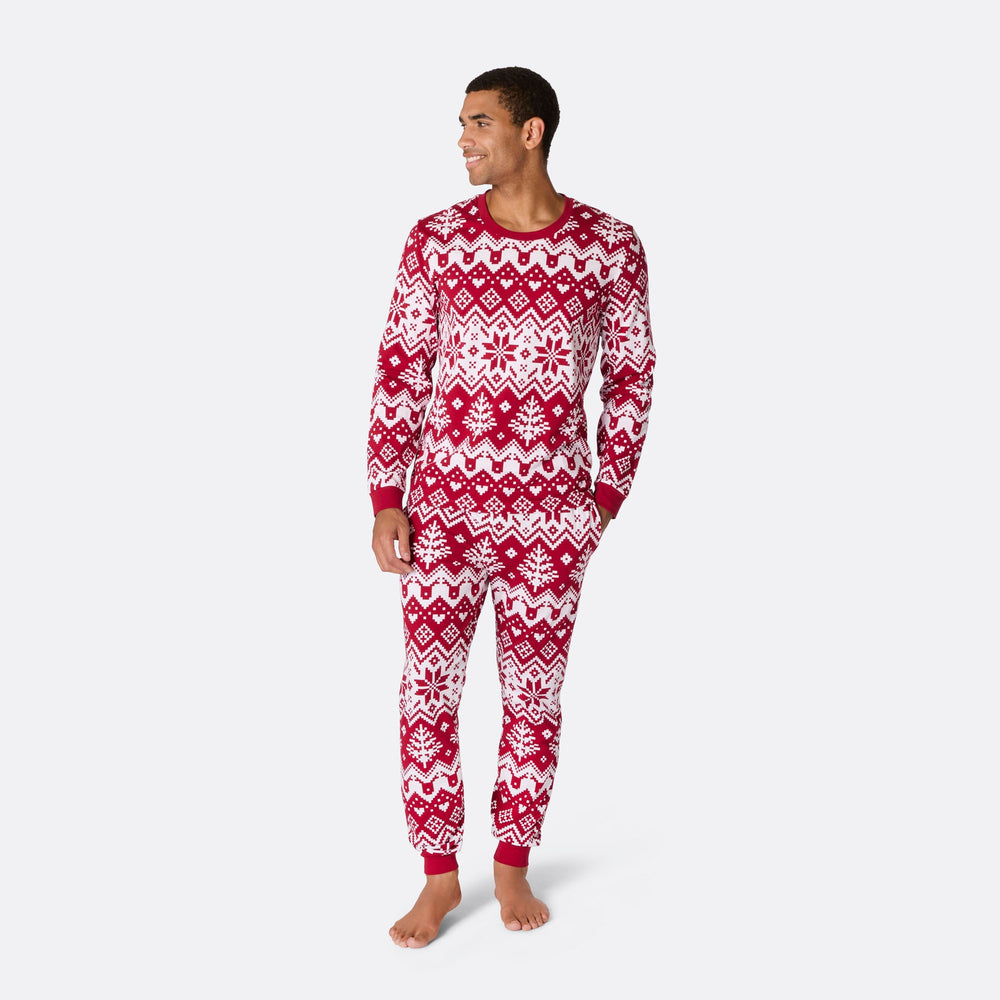
Of course, a proper julebord has a dress code all of its own. A bold Christmas jumper is the unofficial uniform of the festive table, and the whole family can match in coordinated knits from our matching family Christmas jumpers. For a cosier night in with a single dram, soft Christmas pyjamas turn an ordinary evening into a proper Nordic hygge moment.
Where does akvavit come from?
Akvavit is principally produced in Scandinavia, Denmark, Sweden and Norway, and it is popular in Northern Germany too. Its written history goes back roughly 500 years, with one of the earliest mentions in a 1531 letter that praised the spirit as a remedy "for all the illness that a man can have internally". That reputation as a digestive is one reason it is still taken before or during a big meal today.
Each country has its own character. Denmark gives us the famous Aalborg akvavit from Jutland, often dill-forward and crisp. Sweden has the long-aged Skåne style. Norway is home to perhaps the most romantic story of all: Linie akevitt is shipped across the Equator (the "line") to Australia and back in sherry oak casks, the rolling seas and changing climate mellowing the spirit on its journey, a tradition that began by happy accident in the early 1800s.
How to enjoy akvavit this Christmas
You do not need a julebord to enjoy it. Pop a bottle in the freezer a few hours before serving, pour small measures into chilled glasses, and bring out some smoked salmon, rye crispbread and good cheese. Raise a glass, say "Skål", and empty it in one. If neat snaps feels too bold, akvavit has lately found new life in cocktails, where its herbal edge shines with tonic and a slice of lime, much as you would drink a good gin, or in a crisp aquavit sour with citrus.
Pour yourself a snaps, gather the family in their festive knitwear, and you have the makings of a properly Scandinavian Christmas.
Akvavit means 'water of life', from the Latin aqua vitae.
It has been distilled in Scandinavia since at least the 1500s, with a written mention in 1531.
Most bottlings are 37.5% to 45% ABV; below 37.5% is not true akvavit.
Caraway or dill is the required defining botanical under EU rules.
Norway's Linie akevitt is aged at sea, crossing the Equator twice in oak casks.
Frequently asked questions about What Is Akvavit? The Spirit of a Nordic Christmas
Akvavit is a distilled Scandinavian spirit made from grain or potatoes and flavoured with botanicals, chiefly caraway or dill. It is a botanical spirit much like gin, but caraway-led rather than juniper-led, usually bottled between 37.5% and 45% ABV.
Caraway gives akvavit a warm, savoury, slightly peppery and bread-like flavour, with dill, fennel, anise and citrus often alongside. It is rounder and more food-friendly than gin, and aged versions add vanilla and oak from the cask.
Yes. Most akvavit is bottled between 37.5% and 45% ABV, and anything below 37.5% is not really considered akvavit. It is traditionally served in small chilled glasses called snaps rather than in large measures.
It is closer to gin than to vodka, since both are botanical spirits, but akvavit leads with caraway and dill instead of juniper. Like gin, it works well with tonic and lime, though it is most traditionally drunk neat and ice-cold.
There is none in the drink itself, only in the spelling. Akvavit is Danish and Swedish, akevitt is Norwegian, and aquavit is the usual English spelling. All three name the same caraway-led Nordic spirit.